Creating content is easy. Creating content that actually converts visitors into customers? That requires a strategic approach. A well-crafted content marketing strategy bridges the gap between attracting traffic and generating real business results.
In this guide, you’ll learn how to develop a content marketing strategy that doesn’t just attract visitors—it converts them into leads and customers.
What Makes Content Convert?
Before diving into strategy, let’s understand what separates high-converting content from content that merely exists.
Characteristics of converting content:
- Addresses a specific audience with specific problems
- Provides genuine value before asking for anything
- Guides readers toward a natural next step
- Builds trust through expertise and authenticity
- Matches the reader’s stage in the buyer journey
The key insight: content that converts focuses on the reader’s needs, not your desire to sell.
Building Your Content Marketing Strategy
Step 1: Define Your Conversion Goals
Not all conversions are sales. Define what conversion means for each piece of content:
| Content Type | Conversion Goal | Metric |
|---|---|---|
| Blog posts | Email signup | Subscription rate |
| Case studies | Demo request | Form submissions |
| Product guides | Purchase | Sales attribution |
| Webinars | Lead qualification | Registration rate |
Clear goals shape your content approach and help you measure success.
Step 2: Map Content to User Intent
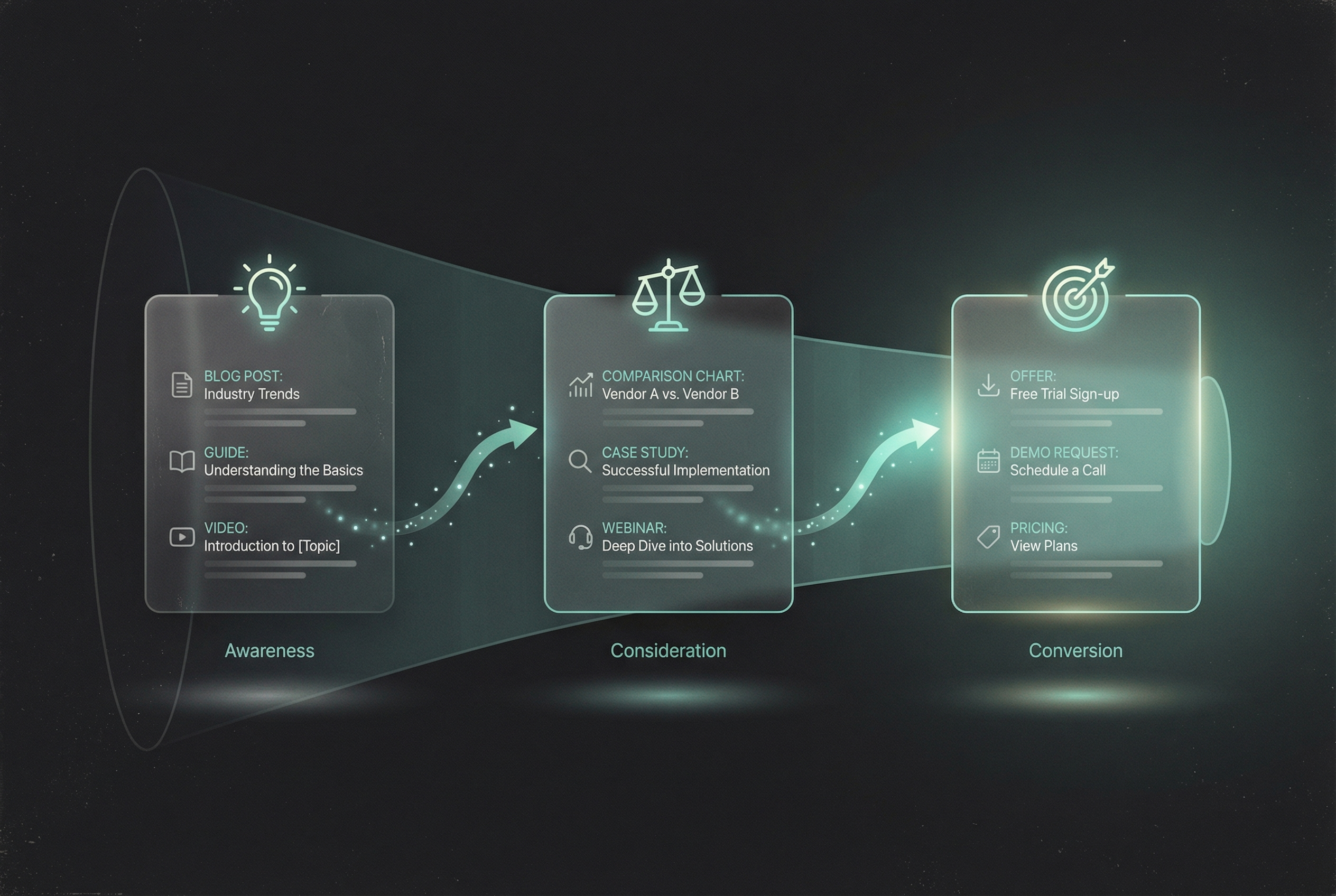
Users arrive at your content with different intentions. Your job is to meet them where they are.
Awareness Stage Content:
- Educational blog posts
- Industry research and reports
- Beginner guides
- Problem-focused articles
Consideration Stage Content:
- Comparison guides
- Case studies
- Expert webinars
- Solution-focused content
Decision Stage Content:
- Product demos
- Free trials
- Customer testimonials
- Pricing guides
Pro Tip: Create content for every stage of the buyer journey, but don’t try to push awareness-stage readers directly to purchase. Guide them naturally through each stage.
Content Planning That Drives Results
Create Content Pillars
Content pillars are comprehensive resources on core topics that matter to your audience. They serve as the foundation of your content strategy.
How to identify content pillars:
- List your products or services
- Identify the problems they solve
- Research related questions your audience asks
- Group topics into 3-5 main themes
Each pillar becomes a hub with supporting content that links back to it, building topical authority.
Develop an Editorial Calendar
Consistency matters more than volume. Plan your content in advance:
Editorial calendar elements:
- Publication dates
- Target keywords
- Content type and format
- Conversion goal
- Call-to-action
- Distribution channels
- Responsible team member
Planning prevents the “what should we write about” scramble and ensures strategic alignment.
Writing Content That Converts
Hook Readers Immediately
You have seconds to capture attention. Start with:
- A surprising statistic or fact
- A relatable problem statement
- A bold claim you’ll support
- A question that resonates
Avoid generic introductions that could apply to any article on any topic.
Structure for Scanability
Most readers scan before they read. Make scanning productive:
- Use descriptive subheadings
- Keep paragraphs short (2-4 sentences)
- Include bullet points and numbered lists
- Bold key phrases and takeaways
- Add relevant images and graphics
Build Credibility Throughout
Trust precedes conversion. Establish credibility by:
- Citing reputable sources
- Including data and statistics
- Sharing relevant experience
- Featuring customer success stories
- Being transparent about limitations
Address Objections Proactively
Great content anticipates and addresses reader objections before they become barriers:
Common objection types:
- “This won’t work for my situation”
- “This seems too complicated”
- “I don’t have time/budget for this”
- “How do I know this is trustworthy?”
Weave answers to these objections naturally into your content.
Crafting Calls-to-Action That Work
Your CTA is where content converts—or doesn’t. Most CTAs fail because they’re generic, poorly placed, or misaligned with content.
CTA Best Practices
Make it specific:
- Weak: “Learn more”
- Strong: “Download the 10-point SEO checklist”
Create urgency without manipulation:
- Weak: “Sign up now before it’s too late!”
- Strong: “Start your 14-day free trial—no credit card required”
Match CTA to content stage:
- Awareness content: Offer more information (guide, newsletter)
- Consideration content: Offer evaluation tools (demo, comparison)
- Decision content: Offer conversion (trial, purchase)
Strategic CTA Placement
Don’t save your CTA only for the end. Strategic placement options:
- After the introduction: For highly motivated readers
- Mid-content: After providing substantial value
- At natural breaks: Between major sections
- In the conclusion: For readers who finished
- Exit intent: For leaving visitors
Test different placements to find what works for your audience.
Measuring Content Performance
Track metrics that connect to your conversion goals:
Traffic metrics:
- Page views and unique visitors
- Time on page
- Scroll depth
- Traffic sources
Engagement metrics:
- Comments and shares
- Backlinks earned
- Return visitors
Conversion metrics:
- Conversion rate by content piece
- Revenue attributed to content
- Lead quality from content sources
- Content-assisted conversions
Use Google Analytics 4 and your CRM to connect content performance to business outcomes.
Frequently Asked Questions
How often should I publish new content?
Quality trumps quantity. Publishing one excellent, comprehensive piece weekly beats daily mediocre posts. Start with a sustainable pace you can maintain, then increase frequency as you build capacity.
Should I gate my best content?
Gate content strategically, not by default. Gate high-value assets like original research, tools, or comprehensive guides. Keep foundational content ungated to build trust and SEO visibility.
How do I repurpose content effectively?
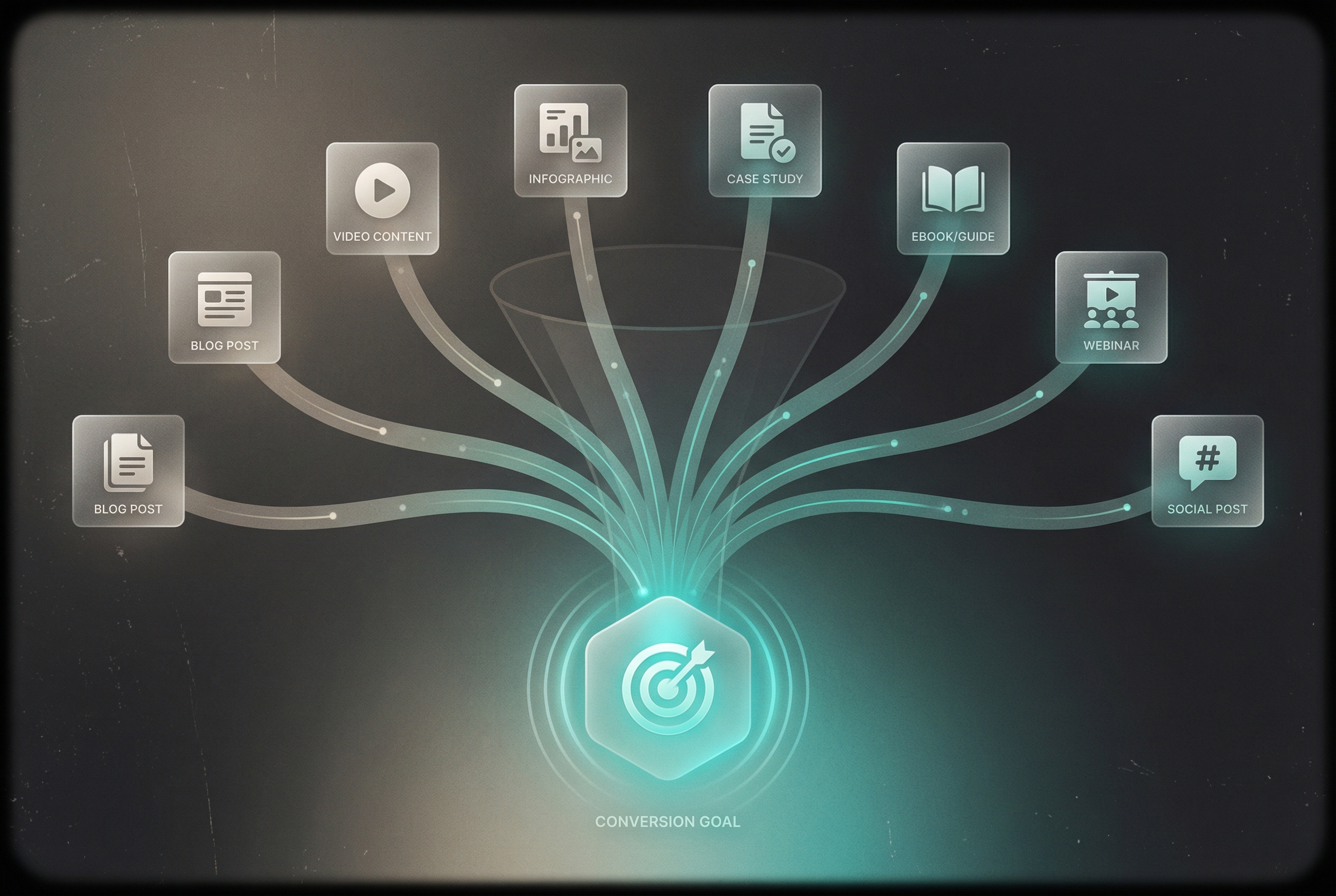
Transform one piece into multiple formats: blog posts become videos, podcasts, infographics, social posts, and email sequences. Each format reaches different audience segments and extends content lifespan.
Conclusion
A successful content marketing strategy aligns every piece of content with specific conversion goals while genuinely serving your audience’s needs. Remember that trust precedes conversion—provide value first, and conversions follow naturally.
Start by auditing your existing content against the frameworks in this guide. Identify your highest-potential pieces and optimize them for conversion before creating new content.
Ready to improve your content conversions? Begin with one piece of content this week. Define its conversion goal, ensure the CTA matches, and measure the results. Build from there.