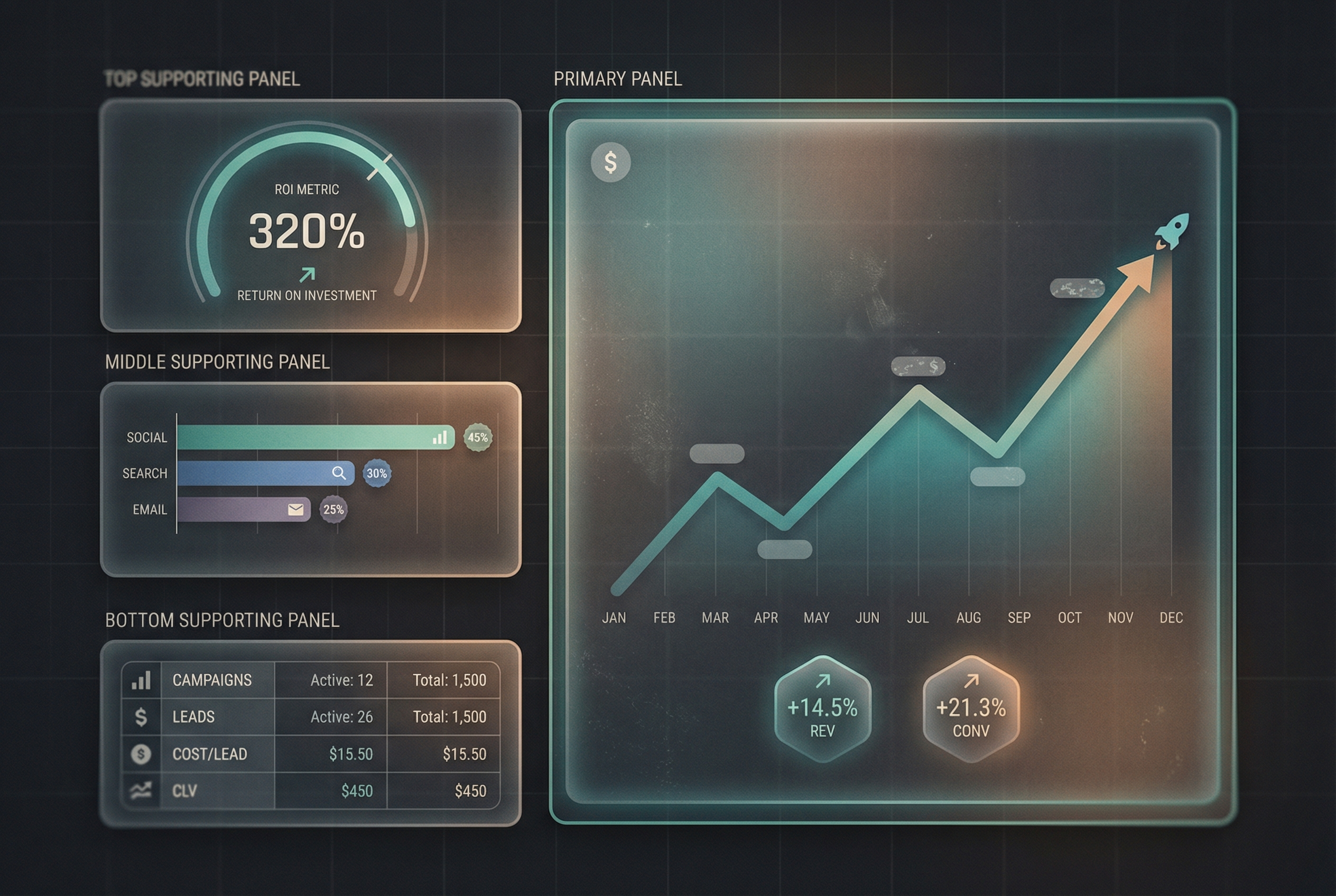
Email marketing delivers the highest ROI of any digital marketing channel—$42 for every $1 spent on average. Yet most businesses leave money on the table with poorly optimized campaigns, generic messaging, and neglected lists.
This guide covers the email marketing best practices that separate high-performing campaigns from those destined for the trash folder.
Why Email Marketing Still Dominates
Despite predictions of its demise, email remains the most effective marketing channel:
Email marketing by the numbers:
- 4 billion daily email users worldwide
- 99% of consumers check email daily
- 59% of consumers say email influences purchase decisions
- Email subscribers are 3x more likely to share content
Unlike social media, you own your email list. No algorithm changes can take away your direct line to subscribers.
Building a Quality Email List
List quality determines email success more than any other factor.
Permission-Based List Building
Never buy email lists. They damage deliverability, violate regulations, and generate poor results. Instead, earn subscribers through:
Effective lead magnets:
- Exclusive discounts or offers
- Downloadable resources (guides, templates, checklists)
- Free tools or calculators
- Email courses
- Early access to products or content
- Members-only content
Pro Tip: The best lead magnets solve a specific, immediate problem. “Free marketing guide” is weak. “10-point checklist to audit your website in 15 minutes” is specific and compelling.
Implementing Double Opt-In
Double opt-in requires subscribers to confirm their subscription. Benefits include:
| Single Opt-In | Double Opt-In |
|---|---|
| More subscribers | Fewer but engaged subscribers |
| Higher spam complaints | Lower spam complaints |
| Lower deliverability | Higher deliverability |
| More invalid emails | Verified email addresses |
The slight reduction in subscribers is worth the quality improvement.
Crafting Subject Lines That Get Opens
Your subject line determines whether emails get opened or ignored. It’s worth spending significant time on this element.
Subject Line Formulas That Work
Curiosity gap: “The marketing mistake costing you thousands”
Specific benefit: “5 ways to cut your ad spend by 30%”
Urgency (when genuine): “Last chance: Workshop seats filling up”
Personalization: “[Name], your monthly marketing report is ready”
Question format: “Are you making these SEO mistakes?”
Subject Line Best Practices
- Keep under 50 characters for mobile visibility
- Front-load important words
- Avoid spam trigger words (free, act now, limited time)
- A/B test consistently
- Match subject to email content (no bait and switch)
Preview Text Optimization
Preview text (preheader) appears after the subject line in most email clients. Use it to:
- Expand on the subject line
- Add a secondary hook
- Include a call-to-action
- Never repeat the subject line
List Segmentation Strategies
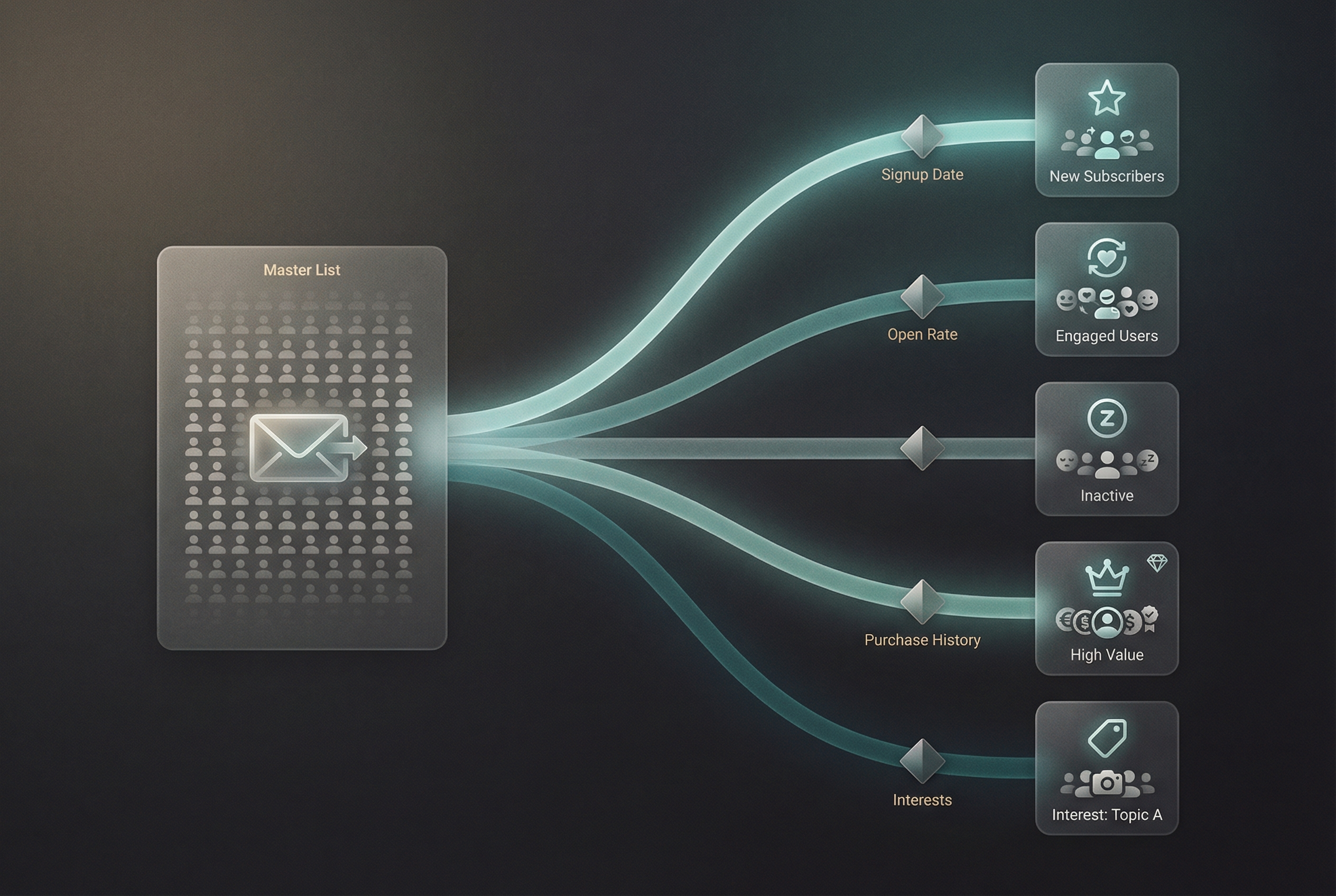
Sending the same email to everyone is a missed opportunity. Segmentation dramatically improves results.
Essential Segments
By engagement level:
- Highly engaged (opened recently, clicks frequently)
- Moderately engaged (occasional opens)
- Inactive (no opens in 90+ days)
By behavior:
- Purchasers vs. non-purchasers
- Product interest categories
- Content topic preferences
- Lead magnet source
By demographics:
- Industry or job role (B2B)
- Location
- Company size
Segmentation Impact
Segmented campaigns see significant improvements:
- 14% higher open rates
- 100% higher click-through rates
- 760% increase in revenue
Start with basic segments and refine as you gather more data.
Email Automation That Nurtures Leads
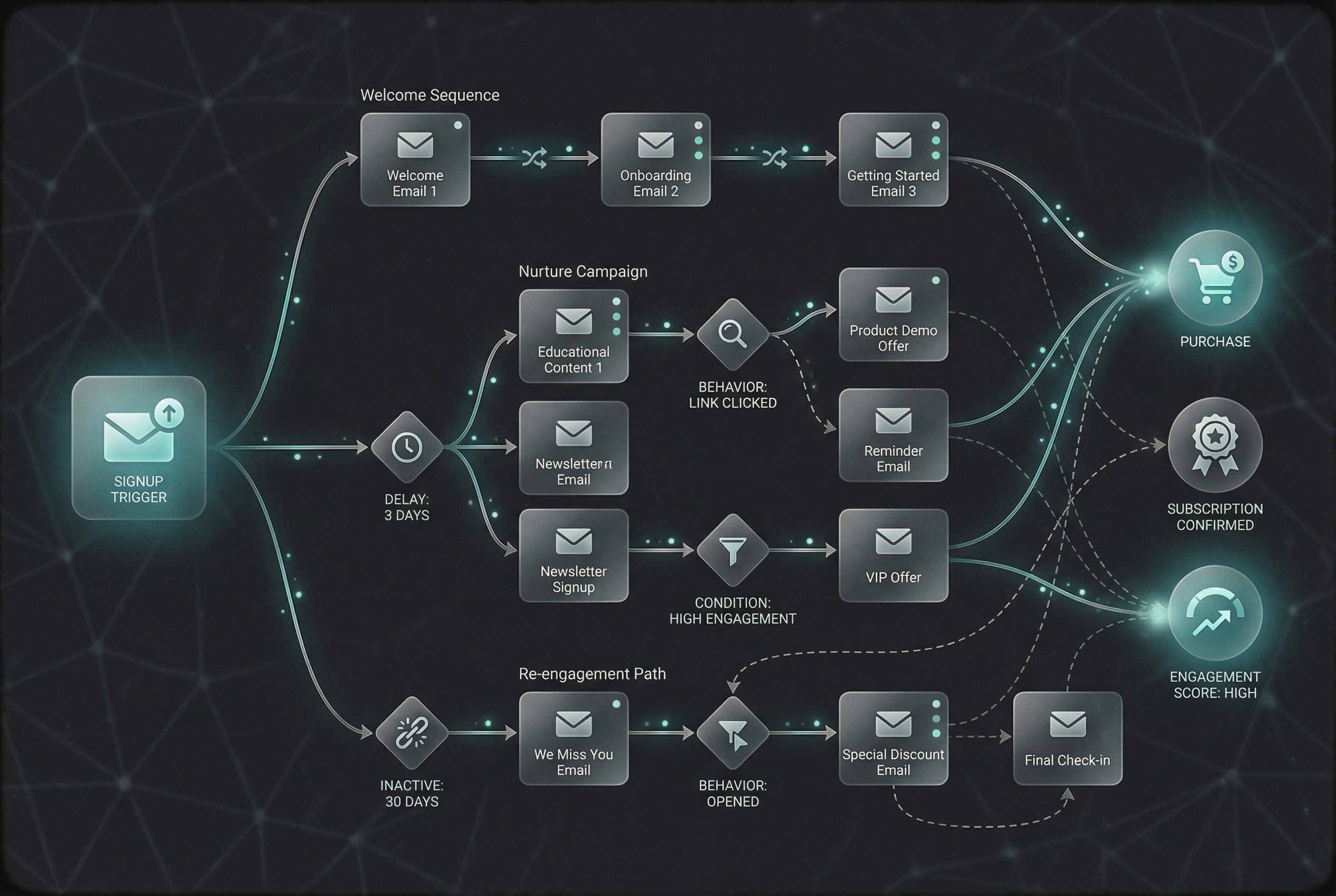
Automation delivers the right message at the right time without manual effort.
Essential Automated Sequences
Welcome sequence (5-7 emails):
- Thank you + deliver lead magnet
- Introduce yourself/brand story
- Best content or resources
- Social proof and case studies
- Soft pitch or next step
- Engagement check-in
- Final value + clear CTA
Abandoned cart sequence:
- Reminder (1 hour after)
- Benefit-focused (24 hours)
- Urgency/scarcity (48 hours)
- Final offer or discount (72 hours)
Re-engagement sequence:
- “We miss you” acknowledgment
- Best recent content
- Preference update request
- Final warning before removal
Automation Best Practices
- Set realistic delays between emails
- Use behavioral triggers, not just time-based
- Include exit conditions (purchased, unsubscribed)
- Monitor and optimize based on data
- Don’t over-automate—maintain human touch
Writing Emails That Drive Action
Email Copy Framework
Hook: Open with something relevant and interesting Problem: Acknowledge the reader’s challenge Solution: Present your offering as the answer Proof: Back claims with evidence CTA: Clear, single call-to-action
Email Design Best Practices
- Single column layout for mobile readability
- Adequate white space
- Scannable format with headers and bullets
- Buttons instead of text links for CTAs
- Images with alt text
- Consistent branding
Mobile Optimization
Over 60% of emails are opened on mobile. Ensure:
- Subject lines visible on small screens
- Touch-friendly buttons (minimum 44x44 pixels)
- Readable text without zooming
- Fast-loading images
- Preview across devices before sending
Timing and Frequency
When to Send
General best times vary by audience. Test these starting points:
B2B emails:
- Tuesday-Thursday
- 10 AM or 2 PM local time
B2C emails:
- Varies more widely
- Evenings and weekends often work well
Your data trumps general advice. Test different times with your specific audience.
How Often to Send
Frequency depends on content value and audience expectations:
Daily: Only if providing consistent value (news, deals) 2-3x weekly: Engaged, content-heavy lists Weekly: Most newsletters and marketing lists Bi-weekly: Less engaged audiences or premium content
Monitor unsubscribe rates. If they spike after increasing frequency, scale back.
Measuring Email Performance
Key Metrics to Track
Delivery metrics:
- Delivery rate (target: 95%+)
- Bounce rate (hard and soft)
Engagement metrics:
- Open rate (benchmark: 20-25%)
- Click-through rate (benchmark: 2-5%)
- Click-to-open rate
- Unsubscribe rate (concern if over 0.5%)
Conversion metrics:
- Conversion rate
- Revenue per email
- Customer lifetime value from email
Improving Email Deliverability
Poor deliverability means your emails never reach inboxes:
- Authenticate with SPF, DKIM, and DMARC
- Clean your list regularly
- Maintain consistent sending patterns
- Avoid spam trigger words
- Use a reputable email service provider
- Monitor blacklist status
Frequently Asked Questions
How do I re-engage inactive subscribers?
Run a re-engagement campaign over 2-3 weeks offering value, then asking if they want to stay subscribed. Remove anyone who doesn’t engage—inactive subscribers hurt deliverability and skew your metrics.
What’s a good email open rate?
A good open rate depends on industry, but 20-25% is a reasonable benchmark. Focus on improving your own rates over time rather than hitting arbitrary numbers. Segmented campaigns typically see much higher rates.
Should I include unsubscribe links?
Yes, always. It’s legally required in most jurisdictions (CAN-SPAM, GDPR) and practically essential. Making it easy to unsubscribe reduces spam complaints and keeps your list healthy.
Conclusion
Email marketing success comes from respecting your subscribers’ inboxes, providing genuine value, and continuously optimizing based on data. Focus on quality over quantity—a smaller, engaged list outperforms a large, unresponsive one every time.
Start by auditing your current email strategy against these best practices. Identify your biggest opportunity for improvement and focus there before trying to fix everything at once.
Your next step: Review your last 10 emails. Identify patterns in your highest and lowest performing messages, then apply those insights to your next campaign.